3D product visualization vs. product photography: which is best for you?
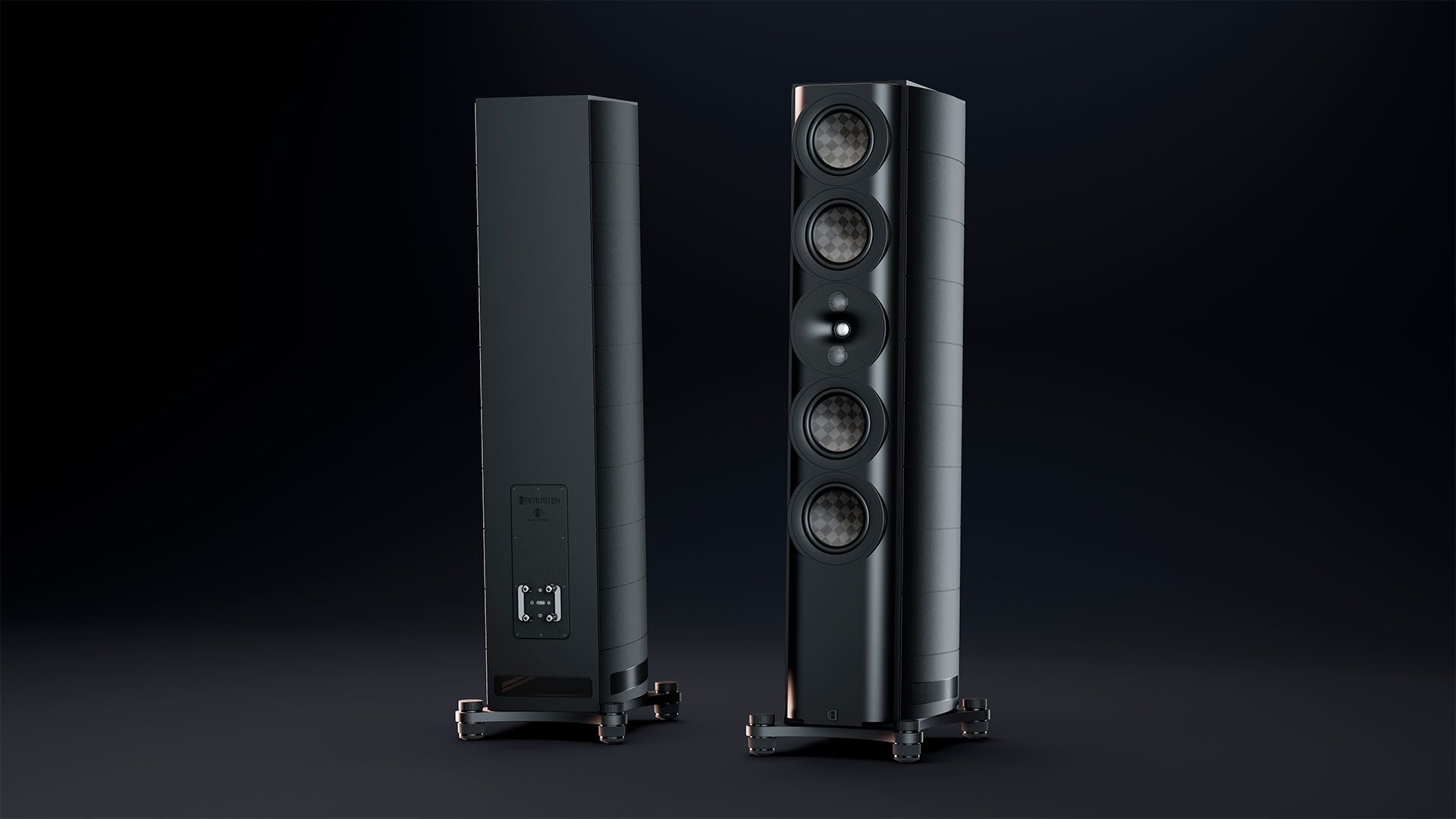
 3D visualization of Perlisten’s S7t-BE loudspeaker
The sharpest 3D experiences for your products
At Simulated Image we often meet companies facing the choice: should we use 3D product visualization or traditional product photography to market our products? Both approaches have pros and cons, and the best solution often depends on your specific needs, your product and your budget. In this article we dig into the differences between 3D product visualization and traditional product photography to help you make the best choice for your business.
We specialise in turning complex ideas into intuitive, engaging and realistic visual material. Our team uses 3D software such as 3ds Max, Blender and V-Ray to create high-quality visualizations and animations for industry, architecture and product design. Our aim is to give you professional imagery without the limitations of traditional photography.
What is traditional product photography?
Traditional product photography means shooting physical products with a camera under controlled lighting. It is a well-known method and has been the standard for decades. The process typically includes:
- Physically producing the product or a prototype.
- Setting up a photo studio with professional equipment, lighting and backgrounds.
- Photographing the product from different angles.
- Retouching the images in editing software.
This can give authentic images and a tactile feel for the product, but it has certain limitations, which we explore below.
What is 3D product visualization?
3D product visualization, also known as CGI (computer-generated imagery), creates digital images of products using 3D software. At Simulated Image, based at Agro Food Park 15, 8200 Aarhus, we build detailed 3D models of your product and render them in different environments, with different materials and lighting.
The benefits are many, especially in terms of flexibility, scalability and cost. We can create images of products that don’t yet physically exist, making it possible to market and sell products before they go into production. That was the case, for example, in our work with Stiesdal Hydrogen in 2025.
This is particularly favourable if your product is technical and CAD files already exist. We can easily build on those existing 3D files and create photorealistic images from them.
Flexibility: which wins on adjustability?
When it comes to flexibility, 3D product visualization is often the clear winner over traditional product photography.
Flexibility in traditional product photography
- Time: Every time you want a new angle, material or colour, a new shoot has to be arranged. That can be time-consuming and involve shipping products back and forth. In some situations this can be solved with AI, which can then be preferable to 3D.
- Prototype required: You need a physical prototype or the finished product, which can delay marketing considerably.
- Limited adjustments: Once the photo is taken, the options for changing lighting, background or perspective are limited. However, if you have a simple or familiar product, such as clothing, you can get very far with AI today, which can make photography a better choice than 3D. If, on the other hand, you have a technical product with many details, AI is rarely precise enough for fine adjustments.
Flexibility in 3D product visualization
- Unlimited creative freedom: In 3D we can change everything from colour and material to lighting, background and environment with a few clicks. We can show your product in endless scenarios without building physical sets, from a clean studio to a realistic kitchen interior.
- No physical prototypes: We can start visualizing your products early in development, long before the first prototype is made. That lets you market and collect feedback early, speeding up your time to market.
- Easy internationalisation: The same 3D model can be used to create visualizations tailored to different markets.
- Product variants: Does your product come in many colours, sizes or configurations? In 3D we can easily create images of every variant without producing and photographing each one physically.
This flexibility is decisive, especially for companies with a broad product range or frequent product changes, where fast access to visual material is essential.
Cost: which is cheapest in the long run?
Comparing the costs of 3D product visualization and product photography can be a little complex, as there are both immediate and long-term expenses to consider.
Costs of traditional product photography
- Upfront costs: Studio hire, props, a professional photographer and stylists: plus transport of products to and from the studio.
- Damage: Physical products can be damaged in transit or during the shoot, adding replacement costs.
- Repeat costs: Every change in design, colour or material means repeating the whole process, with new costs.
Costs of 3D product visualization
- Initial investment: The first 3D model usually requires a higher upfront investment than photographing the product the first time, because we have to build the model, materials, lighting and studio. But this is a one-off cost, and the savings come with the following images.
- Long-term savings: Once the 3D model exists, generating additional images, angles, colour variants or scenarios is extremely cost-effective. You only pay for the time spent adjusting and rendering.
- No transport or physical prototypes: You save on logistics, damage risk and producing prototypes purely for photography.
- Scalability: From one model we can quickly and affordably produce a large number of images for different marketing channels, from webshops to social media and print ads.
But 3D does not always save money. If you sell very familiar, typical B2C products such as clothing, accessories or make-up, a photo + AI solution will almost always be better than modelling your product in 3D.
When is 3D product visualization the best solution, and when is it not?
Here are some scenarios where 3D product visualization outperforms traditional photography:
- Products that don’t exist yet: If you need to market a product that doesn’t exist yet, especially a technical or industrial one, 3D is often the only option. You can try AI, but it often struggles with technical, detailed products.
- Complex products: When products are too large, too small, too dangerous or too complex to photograph effectively: think industrial machinery or microscopic components.
- Many variants: Does your product come in countless colours, materials or configurations? 3D is far more efficient and cost-effective than photographing every variant: unless the product is simple enough to edit with AI.
- Consistent brand expression: 3D gives full control over lighting, camera angles and surroundings, ensuring a uniform, professional look across your entire range.
- Long-term budget and time constraints: Although the initial investment can be higher, 3D is often cheaper and faster in the long run, especially with reuse and changes.
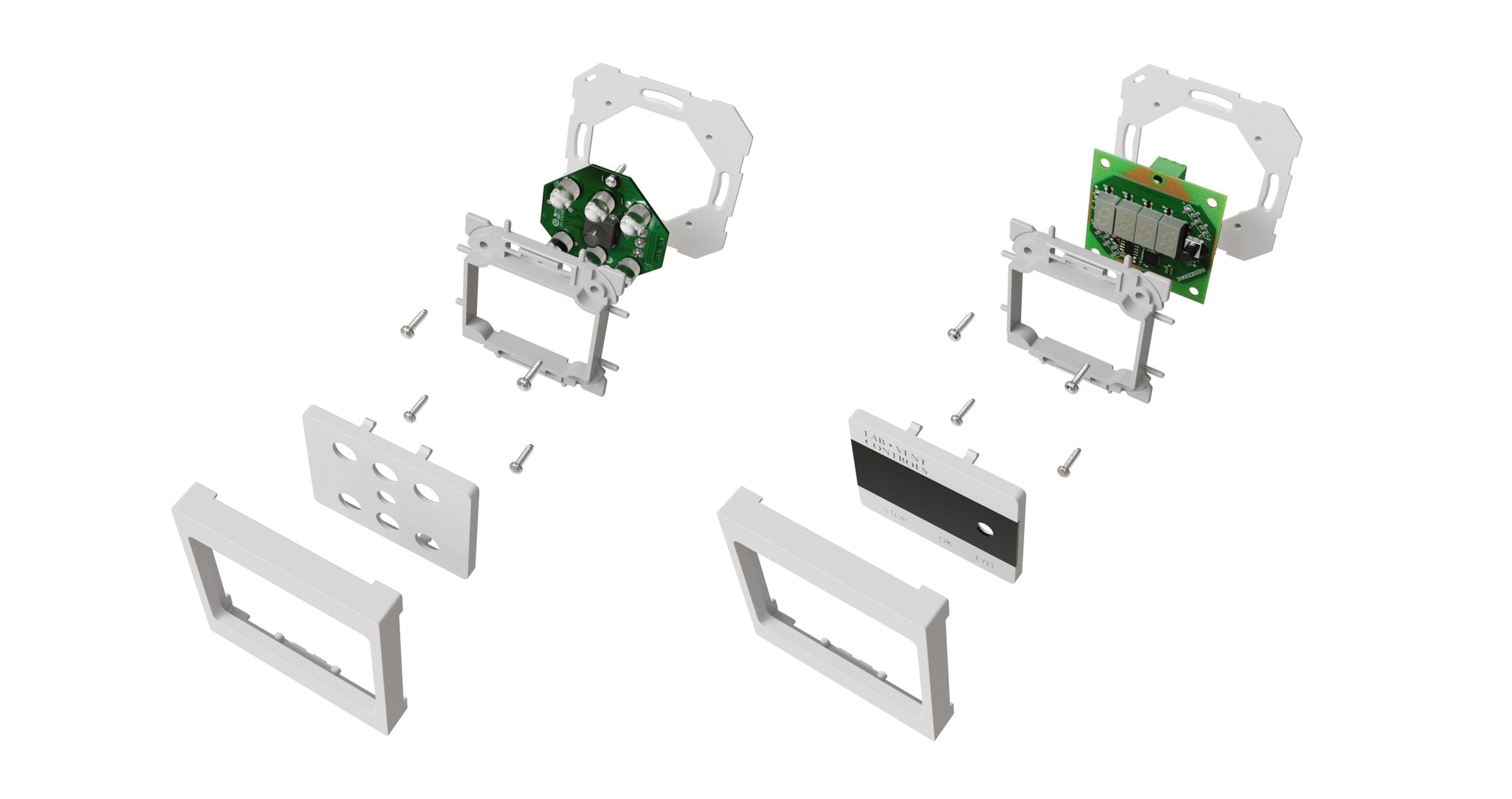
- Showing internal mechanisms: In 3D we can create transparent cut-aways or “x-ray” images to show the inner workings of a product, as in our work with Lab-Vent Controls A/S.
When is traditional product photography the best choice?
Although we are big advocates of 3D, traditional product photography still has its place:
- “Artistic” products: Products where craftsmanship, texture and finish are unique and the slightest nuance must be captured authentically. Real photos give far more credibility here.
- One-off products: If you have a single product with no variants and expect no future changes, a traditional shoot may be enough, and often the cheapest solution.
- Real-life moments: Sometimes a lively, authentic moment captured in a real environment creates a special atmosphere that is harder to replicate 100% in 3D.
- Simple, familiar B2C products: Here, combining traditional photography with AI can often achieve very strong results.
Conclusion: technical products gain the most from 3D, while for simple products it may just be another marketing expense
In the 3D product visualization vs. product photography debate, it is clear that for complex products 3D offers unmatched flexibility, scalability and long-term cost efficiency, especially in digital marketing. At Simulated Image we are dedicated to helping companies use the full potential of 3D technology.
We understand the choice can be difficult and are always ready to discuss your specific needs and give a no-obligation assessment of the best solution for you and your products. Contact us at info@simulatedimage.dk and we will be happy to advise.
Read more about our 3D product visualization services and see examples of our work with clients such as Stiesdal, Perlisten, Organic Fuel Technology and many more.
Can 3D images look as realistic as photos?
Yes, absolutely. With advanced 3D software and expertise, we can create realistic 3D visualizations that are almost impossible to tell apart from real photographs. We use 3ds Max, Blender and V-Ray, and AI tools are used to enhance existing 3D images and generate visual ideas.
Is 3D product visualization more expensive than product photography?
The initial investment in a 3D model can sometimes be higher than a single photo shoot. But for projects with many variants, frequent changes or marketing before production, 3D product visualization is almost always more cost-effective in the long run, as new images can be generated for a fraction of the price.